

What they built with UserEvidence
When Anna stepped into the role, she inherited a bare-bones program, few cross-functional relationships, and a Slack community that wasn’t very engaged.
She built the customer marketing program in two directions at once. Internally, she sat in on sales, product, and support meetings and asked one question: “How can I help you?” She found internal champions who would advocate for her, then proved her value by supporting other teams and keeping leadership consistently updated.
Externally, UserEvidence was already in place when she joined. Although she was initially skeptical—wondering why they needed it on top of SurveyMonkey—things changed once the UserEvidence team stepped in with strategic guidance and showed what the Evidence platform could actually do.
Explore BlueCat’s Research Library
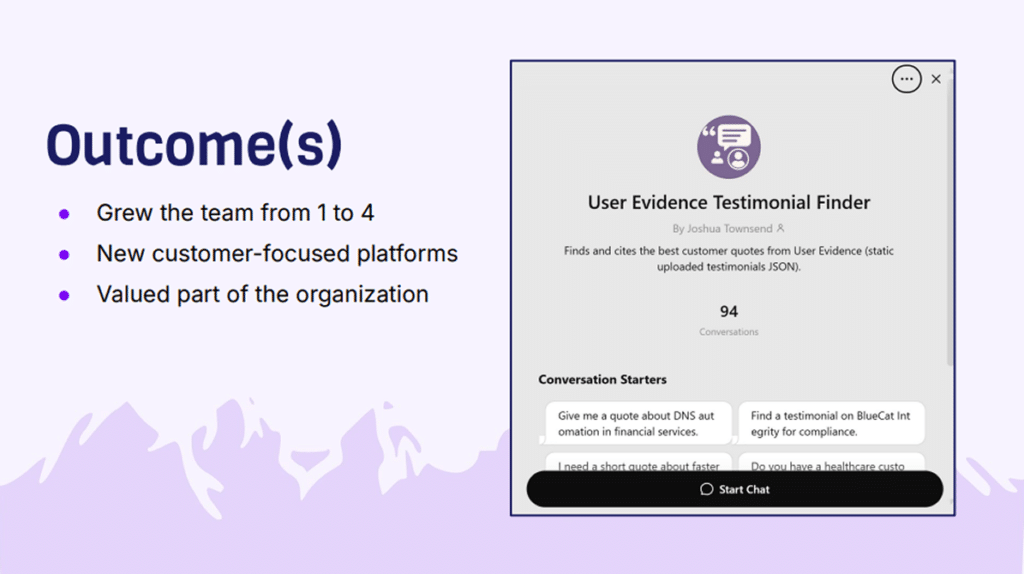
Now, BlueCat’s proof library centralizes 250+ assets including customer testimonials, stats, microsites, case studies, and more. Anna’s team also built a custom GPT called UserEvidence Testimonial Finder, using UserEvidence data alongside third-party sources like Gartner, G2, and PeerSpot. Sales can easily type a request like “I need a quote from someone in healthcare” and get a ready-to-use answer instead of digging across platforms.
What’s next? They’ve since gotten approval to use the Evidence MCP and are moving off ChatGPT onto Claude next.
The impact & results
Anna’s team has grown from 1 to a team of 4, and she now has a larger budget and multiple customer-focused platforms in place, including tools like UserEvidence, Gainsight, and Sendoso.
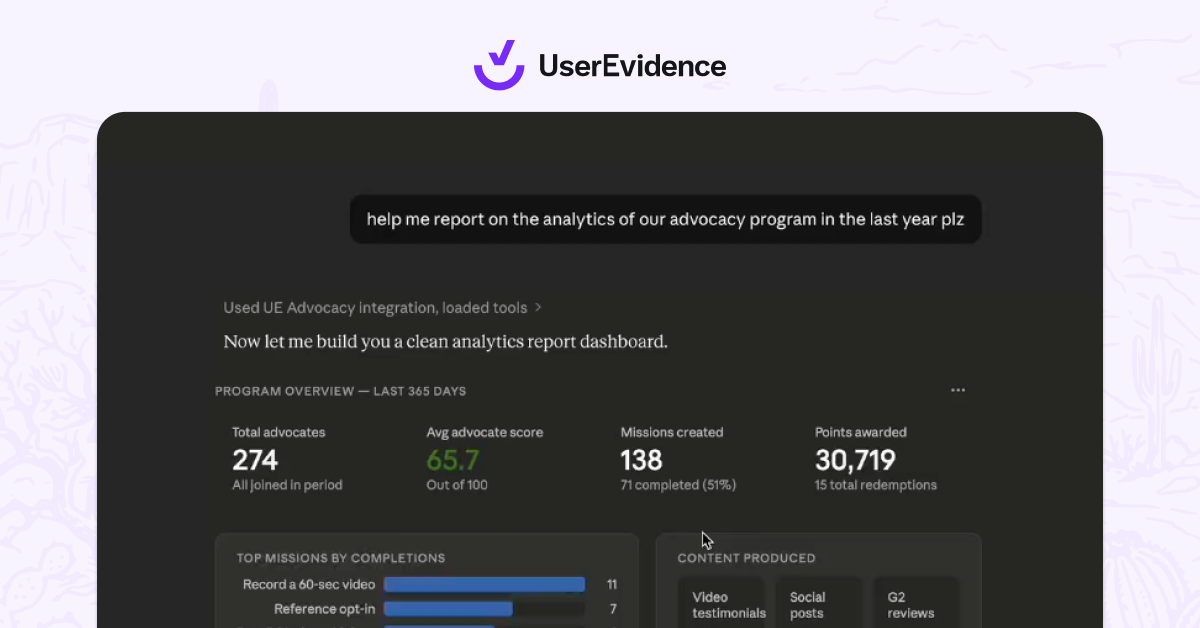
She’s implementing UserEvidence’s Advocacy platform next, aiming to move her ROI story from anecdotal to measurable. Her advice to peers building a program from nothing: start with service, not strategy. Pick partners, not just products.
Buy-in is never done, so keep reminding leadership why the work matters. And the program itself, not a deck, is the proof.