



Until very recently, marketers moved at the speed of whoever could say yes. If they wanted a custom dashboard, internal app, or unique automation, they had to submit a ticket to engineering, which often slowed the building process to a crawl, if not a halt.
Seemingly overnight, all of that changed. In the age of vibe coding, marketers are building for themselves.
chiefmartec and UserEvidence set out to create the first quantitative benchmark to map how vibe coding is unfolding in marketing, where departments see results, and what sets apart the high performers.
Adoption is high. Confidence is strong. But most teams are still vibe coding for behind-the-scenes tools instead of customer-facing ones. And to get the most value, your rollout approach matters more than which tools you choose.
chiefmartec and UserEvidence teamed up to survey 302 SaaS marketing leaders, managers, and practitioners currently using these tools to understand their vibe-coding adoption, what they’re building, how they’re governing data usage, and the benefits they’re seeing.
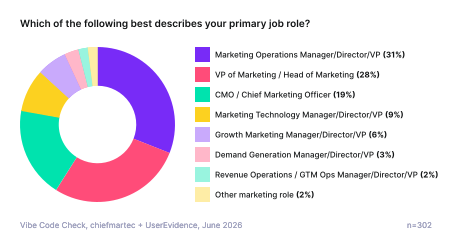
- The marketers we surveyed held a range of leadership roles; the three largest cohorts were marketing operations managers, directors, or VPs (31%), VPs or heads of marketing (28%), and CMOs (19%).
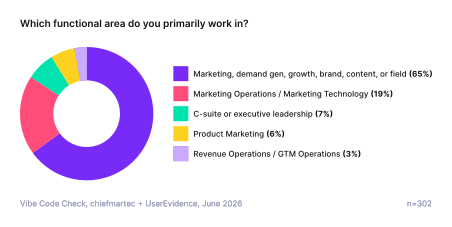
- Nearly two-thirds of respondents (65%) came from marketing functions like demand gen, growth, and brand. 19% sit within marketing ops or marketing technology, and 7% are from the C-suite or executive leadership.
- Most respondents came from mid-size organizations, with over half (55%) in companies with 500-1,999 employees, and a quarter (26%) with 2,000 or more employees.
Where "Vibe Coding" Adoption Stands Today
Two years ago, the term “vibe coding” didn’t even exist. Now, it’s a way of life for savvy builders with an idea, a prompt, and an AI model.
Vibe coding is the practice of using AI code generation tools to create new apps, tools, and automations. You operate as though the code doesn’t even exist, building and iterating quickly.
It’s a marketer’s ticket to creating custom workflows that surface data insights, simplify campaign creation, or automate execution. Marketing teams have already embraced this new normal. For the early adopters of vibe coding tech we surveyed, adoption is surprisingly mature.
Adoption in Marketing Is Already Mainstream
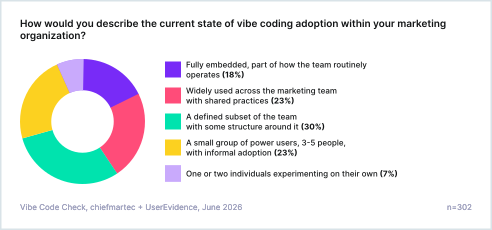
The current state of vibe coding adoption within marketing organizations is promising. Seven out 10 respondents say their team vibe codes with at least some structures, showing strong momentum behind the practice already:
- Four out of 10 (41%) respondents say that vibe coding is widely used across the marketing team or fully embedded in team workflows.
- 30% say that a defined subset of the team vibe codes with some structure around it.
- Only 7% say that they’re still at the stage where just one or two individuals experiment on their own.
This level of adoption is especially remarkable when you think about just how new a concept vibe coding is. At the time of our survey, the term had only existed for 13 months, coming over marketing automation and no-code solutions.
What’s more, over half (57%) of respondents have been using AI code generation or builder tools for less than a year, including 38% who’ve used them for 6-12 months.
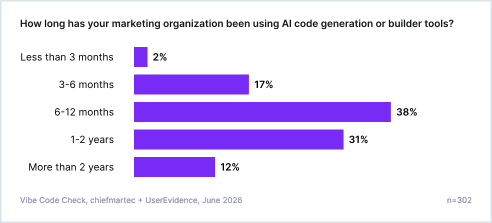
The adoption speed of the practice and the tools is astounding. For most organizations, vibe coding went from fully fringe to solidly mainstream in under 12 months, signaling that organizations are moving quickly to embrace the operational wins vibe coding offers.
Confidence Is High, But Plateaus Mid-Journey
Leadership buy-in is the area where respondents feel most prepared for vibe coding adoption, with 67% of respondents saying their org is fully or mostly ready. At 62% readiness, team skills and confidence perform weakest.
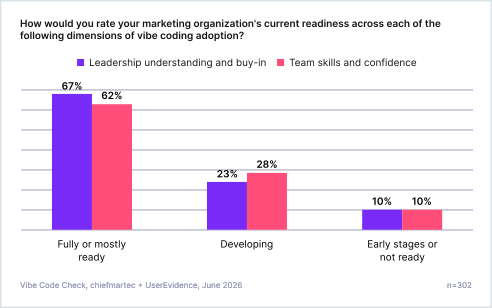
So the top-down support for vibe coding is there; the ongoing work is to upskill and empower individual contributors to actually implement. In fact, CMOs are more than four times more likely than marketing ops managers to call vibe coding a “defining advantage that will separate market leaders” (that’s 57% compared to 14%).
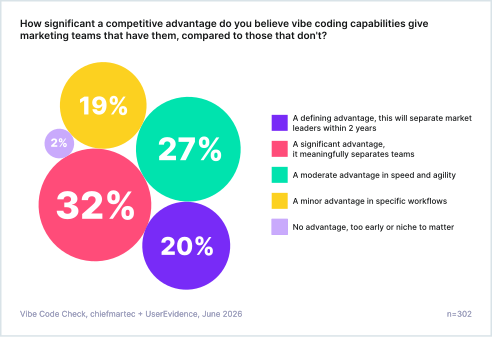
Overall, marketers are widely sold on the impact of vibe coding for first movers. 52% say vibe coding is a significant or defining advantage, 27% say moderate, and 19% say minor.
In light of the strong and growing adoption, respondents are largely optimistic about their teams’ vibe coding capacity. When asked how confident they are in their marketing teams’ ability to build functional tools and automations using AI code generation tools today:

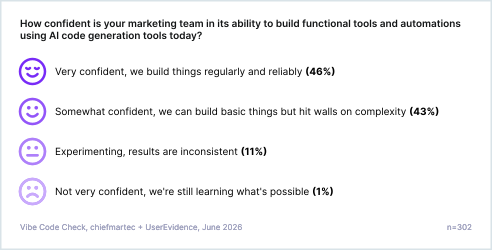
We would expect marketers’ vibe coding confidence to grow in proportion to their experience using AI code generation tools: The longer they vibe code formally, the higher their confidence.
But that confidence growth isn’t a straight line. High confidence barely moves between those vibe coding for 6-12 months (44%) to 1-2 years (45%). But the big jump comes at the two-year mark: 64% of those vibe coding for 2+ years are very confident in their abilities. Scott points out that even though the term itself is new, similar activity from citizen developers using low-code/no-code tools and GTM engineering had already influenced how things get built.
Meanwhile, the proportion of those who say they hit complexity barriers peaks at the 1-2 year mark (46%). This trend is reminiscent of Gartner’s map of the hype cycle, particularly the trough of disillusionment that hits just after users’ peak of inflated expectations. The walls that users are hitting are an essential part of the process of building sustainable norms for a very new technological practice.
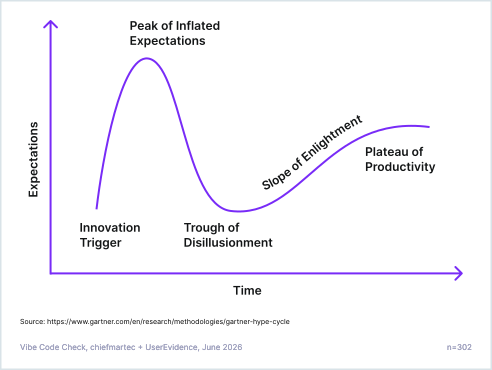

The arc we see is that people start out saying, ‘We’re going to conquer the world with this.’ Once they get deeper into it, they learn it’s a non-trivial undertaking. But after getting past that hump, they start to unlock tremendous benefit.
chiefmartec
Here’s the upshot from the data: while it may take around two years to get vibe coding right, those who commit for that long really reap the results.
If You Can Prompt It, You Can Build It
Marketers are vibe coding their operational wishlists into existence without having to wait for an engineer to have a slow week (if those even exist). Here’s what they’re building.
Faster, Easier, More Insightful Outcomes with AI-Built Tools
Across the board, AI is helping teams offload manual work, complete more highly technical tasks, and activate data in new ways. Marketers’ vibe coding efforts are no exception.
These are the top projects marketing teams have built or automated using AI code generation tools:
- Marketing workflow automations, e.g., lead routing, notifications, data syncs (57%)
- Custom integrations between marketing platforms, databases, or APIs (50%)
- Data cleaning, transformation, enrichment, or analysis pipelines (48%)
- Internal tools or utilities, e.g., campaign calculators, content templates, scoring models (45%)
External projects like creating landing pages or microsites (28%) see lower adoption, and only 17% have built customer-facing apps.
Marketing organizations seem fully sold on behind-the-scenes usage that can make them faster or turn around deeper insights. So far, they’re much more hesitant about net-new customer experiences. But we don’t expect things to stay that way for long.
People are now able to vibe code interactive experiences and agents that can interact with customers and their agents. Going forward, I think that’s going to be a major dimension of competition and a source of creative differentiation.
chiefmartec
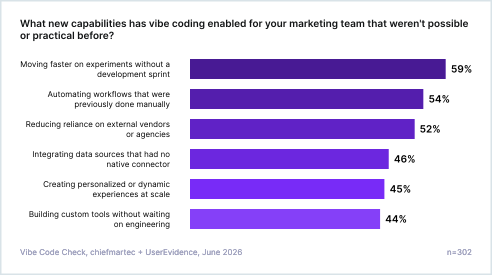
Vibe coding gives teams an unmistakable edge by enabling capabilities that weren’t possible or practical before. The top capabilities marketers have gained are:
- Moving faster on experiments without a development sprint (59%), pointing to their ability to build without waiting or relying on engineering.
- Automating previously manual workflows (54%), which reflects prioritization of their automation and backend use cases.
- Reducing external vendor reliance (52%) and, as we’ll see shortly, that includes replacing some of the SaaS tools in their stack.
Close to half (46%) point to their newfound ability to integrate data sources with no native connector, an outcome where custom integrations shine. This is where vibe coding can resolve a bottleneck that has long plagued marketers. Ever since more than one martech application existed, data has been too spread out to get it into the right place at the right time. That’s why so much vibe-coding creativity has cropped up so quickly; people can build things to unlock once-hidden value from their data.
There’s been an explosion of data, especially when it comes to enrichment data and signals. With all this data we’ve made a bit of a mess…the most successful marketing orgs will use martech to reign it in.
MKT1
These new capabilities translate to tangible benefits for marketing teams, and respondents say that they’ve seen the most direct vibe coding benefits in marketing operations and automation (36%). Reporting, analytics, and data access (22%) also see strong benefits, reinforcing the value of AI-driven insights.
17% see benefits for their demand gen and campaign execution. So while customer-facing apps tend to see lower adoption, some marketers do see customer-focused benefits from vibe coding.

A Shift in Evaluating Tools and Talent
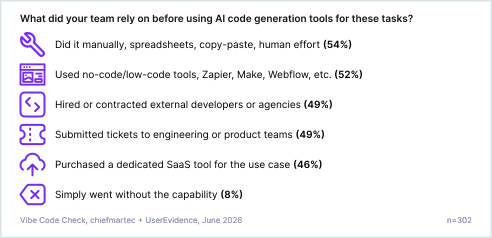
Vibe coding has changed marketing ops in short order, and teams are already phasing out some of the “old ways” of doing things. Before using AI code generation for their preferred use cases, marketing leaders say they relied on:
- Manual methods like spreadsheets, copying-and-pasting, or human effort (54%)
- No-code or low-code tools like Zapier, Make, or Webflow (52%)
- Submitting tickets to the engineering or product teams (49%)
- External developers or agencies (49%)
We’re witnessing the same shift in marketing that we’ve been talking about in sales enablement and technical sales for years. The question is no longer ‘Can I buy a tool for this?’ but ‘Can I build exactly what I need?’ That doesn’t eliminate the need for expertise; the most valuable employees will be the ones who can define problems, apply judgment, and leverage AI to create solutions. The winning organizations will be the ones that can turn expertise into scalable systems faster than everyone else.
CMO, Vivun
This trend is markedly more common among those with more mature adoption: 62% of marketing orgs with fully embedded vibe coding have replaced a SaaS tool compared to 39% of experimenters.
Along the maturity curve, the narrative seems to evolve from initially “automating the manual tasks” to “building what we used to buy” as vibe coding workflows solidify.
Vibe coding is also influencing how marketing leaders evaluate existing and new talent. Three-quarters (76%) of respondents say their team’s ability to vibe code has changed hiring decisions, with 40% changing the skills they prioritize when hiring and 36% able to do more without adding headcount.
So far, this data points to marketing departments not replacing people but, instead, enabling more experimentation. If they’re downsizing anything, it’s manual work, which will, hopefully, create space for more valuable customer-facing work.
The AI-Expanded Tech Stack
In these early days, we’ve already seen constant change, ongoing evolution, and new entrants to the market. Even so, AI’s biggest names are rising to the top of marketers’ stacks.
The Top Vibe Coding Contenders
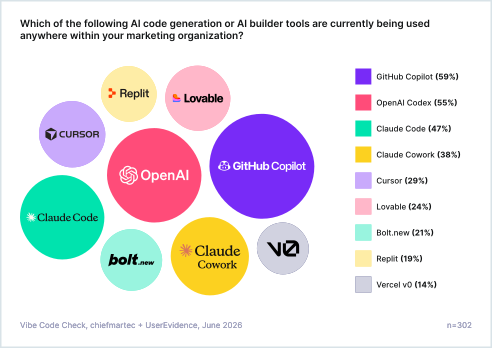
Four AI code generation or AI builder tools are leading the pack:
- 59% use GitHub Copilot
- 55% use OpenAI Codex
- 47% use Claude Code
- 38% use Claude Cowork
And six out of 10 are using either Claude Code or Claude Cowork. Marketing orgs aren’t just picking one tool for vibe coding, either: they’re using an average of three tools, with nearly two-thirds (64%) using three or more tools across their organization.
After the top four favorites, here’s how the next tier of vibe coding tools stacks up:
- 29% use Cursor
- 24% use Lovable
- 21% use Bolt.new
- 19% use Replit
- 14% use Vercel v0
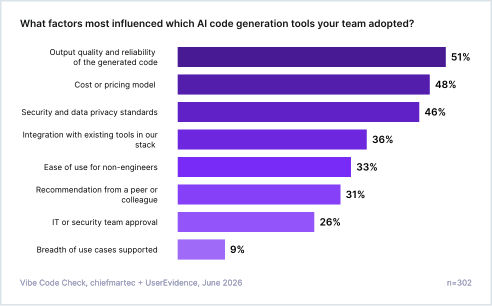
With a range of options in such a new space, which factors led the users’ decision-making on which platform to use?
- 51% say output quality and reliability of the generated code wins.
- 48% point to cost as the deciding factor.
- 46% cite security as the deal-maker.
That third-place spot for security is especially encouraging, considering that security has rarely been the deciding factor for martech stacks.
Ease of use for non-engineers trails in fifth place (33%). So while the usability of these tools matters, this may reinforce an underlying desire to upskill ICs to become more technical to close any gaps the tools leave behind.
The Data Connection (and the Power of MCP)
Multi-faceted marketers connect their vibe-coded projects across their entire tech stack. Around half of marketers integrate their AI-built marketing tools with data warehouses and analytics platforms like Snowflake or Databricks (51%) or marketing automation platforms like Marketo or Pardot (50%).
More than a third also integrate their AI-built tools with their:
- Content management system (38%)
- Creative or design tools like Adobe, Canva, or Figma (38%)
- Customer data platform (35%)
- Product analytics tools like Amplitude or Mixpanel (35%)
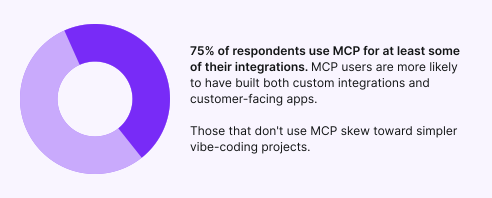
One of the most important takeaways across all of our vibe-coding data findings points to Model Context Protocol (MCP). Three-quarters (75%) of respondents are using it for at least some of their integrations.
MCP usage correlates with vibe coding maturity: MCP users were more likely to have built both custom integrations (25% versus 16%) and customer-facing apps (7% and 2%).
Meanwhile, organizations that don’t use MCP tend to skew toward simpler vibe-coding projects like basic automations (30%) and dashboards (25%).
Scott thinks that MCP will stick around for a while as the standard by which agents and agentic workflows interact with data sources and tools. He cites that almost all of the major martech platforms now have MCP servers directly listed in their marketplaces.
People have voted with their feet. MCP works well enough that marketers or product folks can create something useful, performant, and efficient. It’s kind of a minor miracle that so many vendors and users alike aligned so quickly on this standard.
chiefmartec
Governance as a Power-Up
Vibe coding governance and guardrails is encouragingly high: More than eight out of 10 have some form of policy or governance in place. But there’s still plenty of progress to be made, as far fewer have company-wide standards in place, and training is grossly undervalued as not only a guardrail but also a catalyst for results.
Governance Scales as Adoption Does
83% of respondents say their organization has some sort of formal policy or governance framework specific to the marketing team’s use of vibe coding, while 46% have a formal, organization-wide policy.
But one in five still rely on informal guidelines (14%) or ad hoc usage (4%).
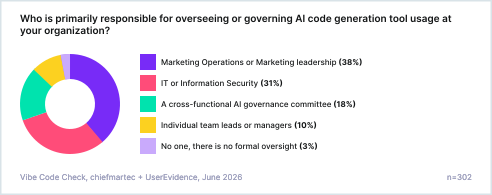
Ownership of vibe coding governance varies. In nearly four out of 10 orgs (39%), marketing ops or leadership is responsible for overseeing vibe coding governance. IT and security take point in 31%, and 18% have a cross-functional AI governance committee.
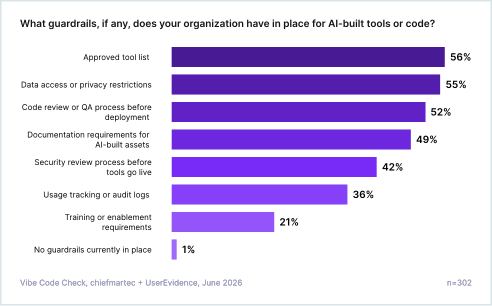
Naturally, since vibe coding is such a new concept, there’s no universal playbook for how to govern it or what structures should be in place. The most common guardrail that respondents have in place is an approved tool list (56%), establishing the only permitted vibe coding solutions. Around half also have:
- Data access or privacy restrictions that dictate what AI can access (55%)
- Code review or QA process before deployment (52%)
- Documentation requirements for AI-built assets (49%)
The good news is that well-established governance isn’t holding back vibe coding workflows; in fact, if anything, it’s closely associated with maturity. 92% of marketing orgs with fully embedded workflows have formal governance, and 70% have organization-wide policies. In contrast, 25% of experimenters are still operating with informal guidelines. As your governance grows, your team’s confidence does, too.
Scott compares the role of vibe coding governance to the role of brand guidelines. While the wider team has some creative freedom to create and publish content, it needs to adhere to a defined brand voice standard. “Marketing ops and marketing engineers set the foundational standards for vibe coding. Within those guardrails, the team can be empowered to do a lot,” he says.
Training and Upskilling Are Desperately Needed But Missing the Mark
Vibe coding training and onboarding leave something to be desired. Just 21% of respondents include training or enablement requirements as one of their vibe coding guardrails, placing it dead last among governance measures.
That trend becomes more concerning when we note that the vibe coding skills gap is marketers’ number-one barrier (44%) to expanding vibe coding further in their organization. And team members’ uneven skill levels rank number one among vibe coding frustrations that impact their work. Thus far, organizations appear to be governing tools closely (with approved lists, code review, and data restrictions) but people, less so.
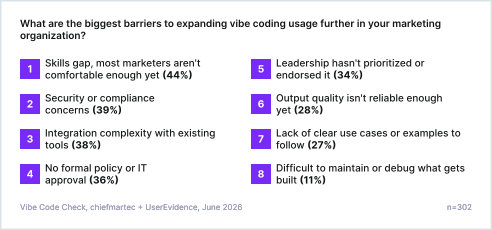
Marketers recognize that the vibe coding skills gap is a pain point that’s slowing them down. But what they may not see (until now) is that training correlates with all-around improved vibe coding results.
The teams that acknowledge their need for training perform better on the whole. Organizations that require training as a guardrail for vibe coding are more likely to be very confident (52% versus 44% overall) and to see ROI within days or weeks (41% versus 30% overall).
These orgs recognize how little they actually know, so they see a clear need for training. When their teams get it, they achieve the exact outcomes vibe coding exists to create.
The onboarding and training that are happening typically come from an internal source, rather than outside forces. For instance, the largest cohort of respondents (43%) says that marketing ops or a technical marketing role owns or drives vibe coding usage in their org. This checks out: These individuals are already process-minded, and the vibe coding philosophy naturally gels with their role. For another 27%, a dedicated “marketing engineer” sits in a hybrid role that oversees vibe coding.
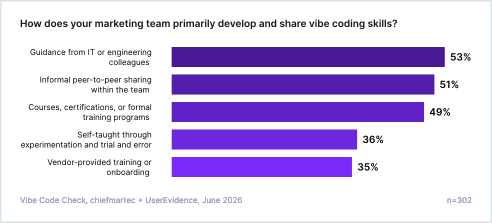
Informal and optional skill development is currently crowdsourced from a variety of sources. Over half (53%) say the marketing team gains vibe coding skills from IT or engineering colleagues, 51% from peers, and 49% from formal courses.
Just 35% lean on vendor-provided training, indicating that, so far, users prefer to learn from those they already know and work with than to outsource.
How Organizations Are Getting the Most Out of Vibe Coding
Maybe vibe coding initially appealed to marketers because of the novelty. But early adopters have already gone well beyond tinkering; they’re figuring out how to drive value and meet their goals better and faster with AI-built tools.
Marketers See Fast Vibe Coding ROI and Quick Wins
Marketing teams’ most common vibe coding goals are to (1) build custom capabilities that aren’t available in off-the-shelf tools and (2) to move faster without adding headcount. And a majority have already seen wins in both areas: 54% say that they measure and describe wins based on new capabilities they didn’t have before, and the same proportion measure wins based on faster campaign or project execution.
Marketers are also, as we’ve seen, leaning on vibe coding for deeper and different insights. 42% say accessing data in new ways is a primary goal, while 42% point to improving reporting. Meanwhile, 45% measure their vibe coding wins based on improved data quality or reporting accuracy.
Respondents gauge vibe coding success based on cold, hard cash, too: 49% measure wins based on cost savings from replacing a vendor or tool.
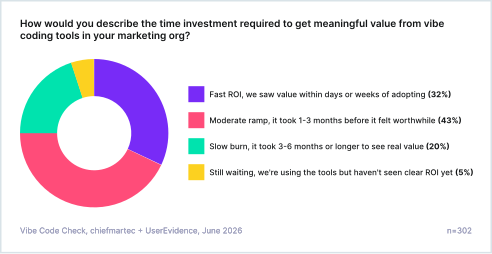
And most don’t have to wait long to see returns from their time investment in vibe coding. A third (32%) reported fast ROI within weeks or even days of adoption, while 43% said it took 1-3 months before the practice felt worthwhile. Just a fifth (20%) said it took 3-6 months to see real value.
Respondents are widely doubling down on the results they’ve already seen, no matter how long it took to see them. Nearly nine out of 10 (89%) expect their usage to expand in the next 12 months, including 43% who are expanding significantly and actively investing.
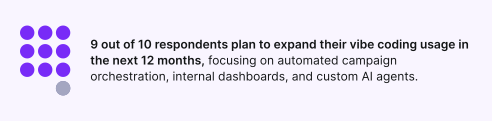
Next, they plan to use vibe coding to explore:
The adoption speed of the practice and the tools is astounding. For most organizations, vibe coding went from fully fringe to solidly mainstream in under 12 months, signaling that organizations are moving quickly to embrace the operational wins vibe coding offers.
- Automated campaign orchestration (50%)
- Internal dashboards or reporting tools (48%)
- Custom AI agents for marketing workflows (42%)
We saw earlier that, to date, audience-facing vibe coding use cases aren’t currently marketers’ go-to projects. But this data signals that marketers are likely building the foundation now. With half of respondents looking to vibe code automated campaign orchestration, they’re gearing up for more external use cases as they develop their skills and uncover more of what the tools can do.
Marketers See Fast Vibe Coding ROI and Quick Wins
A few key patterns set apart the marketing orgs that are handling vibe coding like pros.
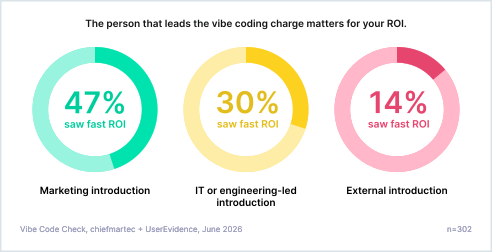
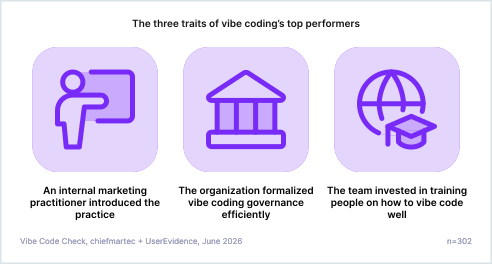
First, the introduction was an inside job: Rather than a vendor pitching vibe coding, marketing ops or a technical marketer led the charge.
- Of the respondents who had a marketing practitioner-led introduction, 47% saw fast ROI within days or weeks.
- An IT or engineering-led introduction drove fast ROI 30% of the time: not as strong as marketing-led effort, but better than an external intro.
- External vendor, agency, and partner introductions lag behind, driving fast ROI only 14% of the time. 45% of this cohort is in “slow burn” or still waiting to see ROI.
“If you want to be at the top of your game in marketing operations, you’ve probably been learning these vibe coding skills and capabilities for a while. Their internal motivation and mental models of systems, algorithms, and marketing automation are very code-like in the way things get structured,” Scott explains. That may be one reason why marketing ops is skilled at getting the team on board.
A second key marker of vibe coding success is quickly formalized governance. Mature marketing orgs didn’t wait for scale to add guardrails; they added guardrails to enable scale. As we saw, governance correlates with high adoption and maturity, so contrary to the stereotype of governance slowing things down, it actually enables speed here.
Finally, vibe coding’s high achievers so far invest in training people, not just approving tools. The 21% of respondents who include training as a guardrail outperform their peers in vibe coding confidence and in ROI.
If your marketing organization is early on in its vibe coding journey, don’t lose too much sleep over which tools to try. (Though you should experiment and explore in this stage.) Rather, focus your energy and attention on the policies and processes that turn vibe coding into an essential skill for your team. That will be the foundation of all the innovation that’s ahead.
Focus on Your Team More Than Your Tools
Vibe coding is a strong presence in marketing. It’s real, it’s widespread, and it’s accelerating. Maybe most importantly, it’s driving actual changes and results that are a tangible asset to the business and brand.
In this new world where you can prompt whatever you wish into existence (within reason… and often imperfectly), the defining advantage won’t come from the tech itself. Sure, the tools you pick matter. But the real edge comes from change management and operational norms. The standout marketing orgs will figure out how to empower everyone on the team to make vibe coding work for them, not just power users or the technically savvy.
Going forward, the winning marketers will create the tools (and world) they want to see for themselves. What will your team build?